Thin-film vs thick-film conformal coating: solvent, cure and film build compared
18 October 2026 · Checked against the ELANTAS TDSs for PL 4122 E BLF FLZ (Product Information 27/02/2024, p. 2–3), PT 4600 (TDS N°1875 Rev. 2, 02/2024, p. 2–3), PK 4340 Schwarz (TDS N°1893 Rev. 2, 03/2024, p. 2–3) and MR 3406 (16/12/2009, p. 2–3), and the ELANTAS Bectron electronic protection brochure (10/2017, p. 2–3 and 8), on 2026-11-12
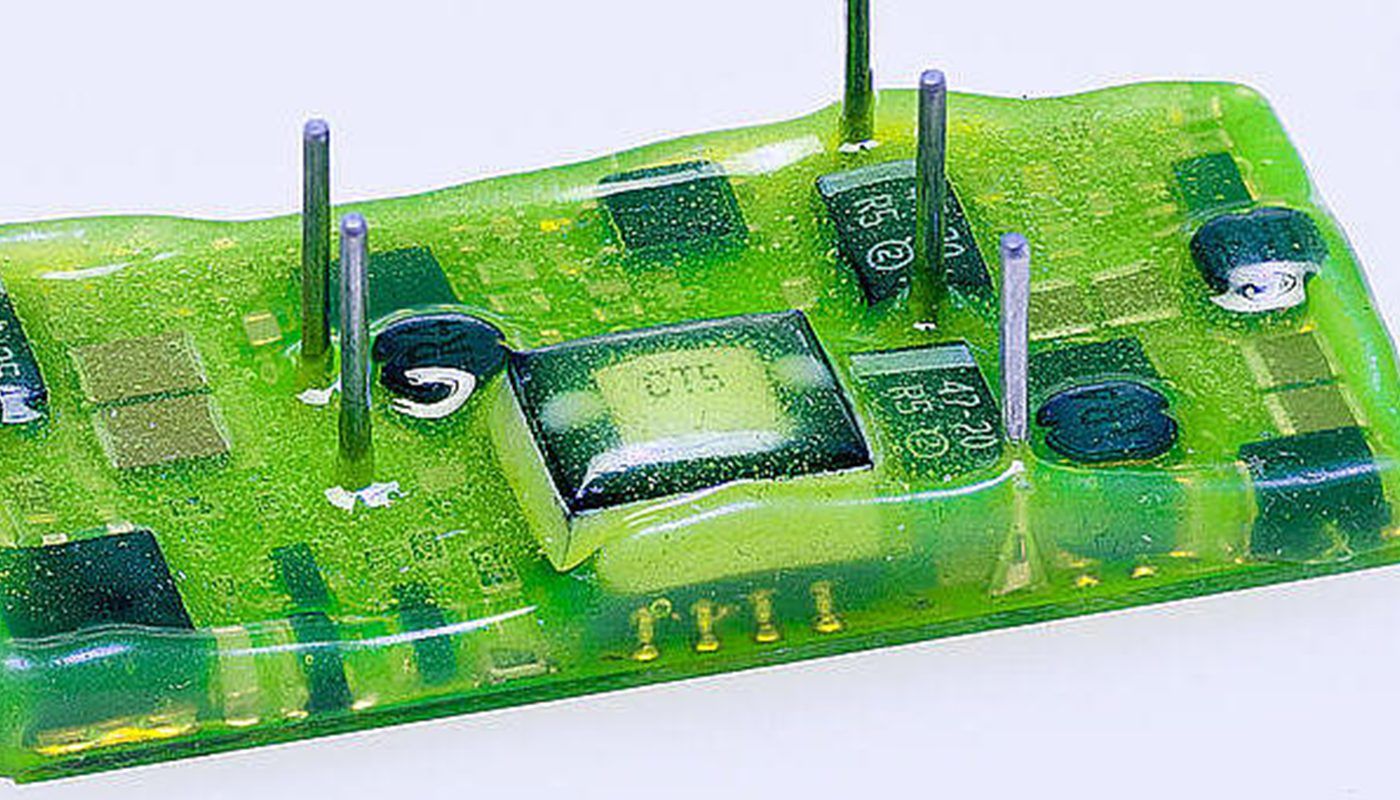
The difference is solvent content and film build. A thin-film coating such as Bectron® PL 4122-40 E is a solvent-based varnish at 40 ± 2 % solids and about 80 mPa·s. A thick-film coating such as PT 4600 is solvent-free, referenced at 200 ± 50 µm, and UV-cured in about 5 seconds at 3000 mJ/cm², according to the ELANTAS TDSs.
How ELANTAS classifies the two
| Class | Chemistries | Curing | Source |
|---|---|---|---|
| Thin film | Alkyd, acrylate, silicone (1K) | Room temperature or oven | ELANTAS brochure 10/2017, p. 2 |
| Thick film | VOC-free; PUR, epoxy, silicone (1K) | UV, room temperature, temperature or humidity | ELANTAS brochure 10/2017, p. 2 |
| Melting resin | VOC-free (1K) | Cooling only | ELANTAS brochure 10/2017, p. 2 |
The same brochure describes thick-film coatings as “for optimum edge covering and fast processing” (p. 2–3). It gives no measured edge-coverage value.
Four coatings side by side
| Product | Type | Solids / solvent | Viscosity (method) | Cure | Film thickness in the TDS | Temperature | Source |
|---|---|---|---|---|---|---|---|
| PL 4122-40 E | Thin film, urethane-modified alkyd | 40 ± 2 % solids (ISO 3251, 1.5 g, 2 h, 130 °C); flammable solvent, no aromatic compounds | 65 ± 5 s, 4 mm cup, 23 °C, ≈ 80 mPa·s (DIN/EN/ISO 2431) | 16 h at 23 °C; 0.5 h at 80 °C; about 10 min in a regulated in-line oven | cured coating below 300 µm; mandrel test on a 0.06 mm film | Temperature index 134 °C (IEC 60216) | Product Information 27/02/2024, p. 2–3 |
| PT 4600 | Thick film, 1K polyurethane, UV and moisture cure | Solvent-free, VOC-free | 400–900 mPa·s (DIN 53229, 23 °C) | UV 5–10 s; 3–7 s at 2,500–3,500 mJ/cm² UVA; shadow areas 2–3 days by moisture | “usual film thickness” 200 ± 50 µm | −40 to +125 °C | TDS 02/2024, p. 2–3 |
| PK 4340 | Thick film, 1K polyurethane, thermal cure, thixotropic | 1K polyol with encapsulated polyisocyanate | 8,000–11,000 mPa·s (DIN 53019, D = 15 s⁻¹, 23 °C) | 30 min at 90 °C (ELANTAS recommends 90 °C) or 60 min at 80 °C; IR <5 min attainable | not stated | Temperature cycling −60 to +125 °C | TDS 03/2024, p. 2–3; ELANTAS letter 10.04.2024 |
| MR 3406 | Thick-film hot melt, polyolefin | Thermoplastic, no curing reaction | 520 ± 200 mPa·s at 180 °C (DIN 53018) | Solidifies on cooling; no curing oven | not in the TDS; ELANTAS brochure: approx. 200–400 µm with a monofilament system | −40 to +120 °C | TDS 16/12/2009, p. 2–3; brochure p. 8 |
PL 4122-40 EThin film, urethane-modified alkyd
- Product
- PL 4122-40 E
- Solids / solvent
- 40 ± 2 % solids (ISO 3251, 1.5 g, 2 h, 130 °C); flammable solvent, no aromatic compounds
- Viscosity (method)
- 65 ± 5 s, 4 mm cup, 23 °C, ≈ 80 mPa·s (DIN/EN/ISO 2431)
- Cure
- 16 h at 23 °C; 0.5 h at 80 °C; about 10 min in a regulated in-line oven
- Film thickness in the TDS
- cured coating below 300 µm; mandrel test on a 0.06 mm film
- Temperature
- Temperature index 134 °C (IEC 60216)
- Source
- Product Information 27/02/2024, p. 2–3
PT 4600Thick film, 1K polyurethane, UV and moisture cure
- Product
- PT 4600
- Solids / solvent
- Solvent-free, VOC-free
- Viscosity (method)
- 400–900 mPa·s (DIN 53229, 23 °C)
- Cure
- UV 5–10 s; 3–7 s at 2,500–3,500 mJ/cm² UVA; shadow areas 2–3 days by moisture
- Film thickness in the TDS
- “usual film thickness” 200 ± 50 µm
- Temperature
- −40 to +125 °C
- Source
- TDS 02/2024, p. 2–3
PK 4340Thick film, 1K polyurethane, thermal cure, thixotropic
- Product
- PK 4340
- Solids / solvent
- 1K polyol with encapsulated polyisocyanate
- Viscosity (method)
- 8,000–11,000 mPa·s (DIN 53019, D = 15 s⁻¹, 23 °C)
- Cure
- 30 min at 90 °C (ELANTAS recommends 90 °C) or 60 min at 80 °C; IR <5 min attainable
- Film thickness in the TDS
- not stated
- Temperature
- Temperature cycling −60 to +125 °C
- Source
- TDS 03/2024, p. 2–3; ELANTAS letter 10.04.2024
MR 3406Thick-film hot melt, polyolefin
- Product
- MR 3406
- Solids / solvent
- Thermoplastic, no curing reaction
- Viscosity (method)
- 520 ± 200 mPa·s at 180 °C (DIN 53018)
- Cure
- Solidifies on cooling; no curing oven
- Film thickness in the TDS
- not in the TDS; ELANTAS brochure: approx. 200–400 µm with a monofilament system
- Temperature
- −40 to +120 °C
- Source
- TDS 16/12/2009, p. 2–3; brochure p. 8
Solvent and ventilation
The PL 4122 TDS states the varnish “is flammable and good ventilation is important in all processing areas”; it is lead-free and has no aromatic compounds in the solvent. The grades differ by solids and viscosity:
| Grade | Solids (ISO 3251) | Flow time (DIN/EN/ISO 2431, 23 °C) | Use named in the TDS | Source |
|---|---|---|---|---|
| PL 4122-37 E | 37 ± 1 % | 40 ± 3 s, 4 mm cup (≈ 50 mPa·s) | general applications | Product Information 27/02/2024, p. 2–3 |
| PL 4122-40 E | 40 ± 2 % | 65 ± 5 s, 4 mm cup (≈ 80 mPa·s) | general applications | Product Information 27/02/2024, p. 2–3 |
| PL 4122-45 E | 45 ± 1 % | 40 ± 3 s, 6 mm cup (≈ 240 mPa·s) | dipping, diluted with Thinner 239 | Product Information 27/02/2024, p. 2–3 |
Thinner 217 can be used in the storage cups of automatic coating equipment, according to the same TDS. PT 4600 has no solvent, but it is moisture-sensitive: containers must stay sealed, and Thinner 300 removes liquid PT 4600 and cleans the equipment (TDS 02/2024, p. 2).
Cure and line layout
| Product | What the line needs | TDS caution | Source |
|---|---|---|---|
| PL 4122-40 E | Drying area (16 h at 23 °C) or oven (0.5 h at 80 °C; about 10 min in-line) | Limit the rate of temperature increase in the in-line oven “to avoid bubbles in the coating” | Product Information 27/02/2024, p. 2 |
| PT 4600 | UV conveyor at 1–2.5 m/min | Speed window set “to limit influence of heat”; sunlight or UV inspection lamps start pre-curing | TDS 02/2024, p. 2 |
| PK 4340 | Oven at 80 or 90 °C, or IR | Nitrogen atmosphere advisable in the storage tank to protect from humidity | TDS 03/2024, p. 2 |
| MR 3406 | Heated application equipment, no oven | Nozzle at 190–200 °C; reservoir at 170 °C for 1 day maximum | TDS 16/12/2009, p. 2 |
PL 4122-40 EDrying area (16 h at 23 °C) or oven (0.5 h at 80 °C; about 10 min in-line)
- TDS caution
- Limit the rate of temperature increase in the in-line oven “to avoid bubbles in the coating”
- Source
- Product Information 27/02/2024, p. 2
PT 4600UV conveyor at 1–2.5 m/min
- TDS caution
- Speed window set “to limit influence of heat”; sunlight or UV inspection lamps start pre-curing
- Source
- TDS 02/2024, p. 2
PK 4340Oven at 80 or 90 °C, or IR
- TDS caution
- Nitrogen atmosphere advisable in the storage tank to protect from humidity
- Source
- TDS 03/2024, p. 2
MR 3406Heated application equipment, no oven
- TDS caution
- Nozzle at 190–200 °C; reservoir at 170 °C for 1 day maximum
- Source
- TDS 16/12/2009, p. 2
For a UV thick film, we calculate the dose at the board from lamp type, lens, working distance and belt speed. Naltek offers Hoenle AG LED UV curing systems.
Film build and edges
| Product | Film-build statement | Source |
|---|---|---|
| PT 4600 | “For a usual film thickness of 200 ± 50µm and 3000 mJ/cm², curing takes approx. 5 seconds.” | TDS 02/2024, p. 2 |
| PK 4340 | “The rapid increase of viscosity at low shear allows small areas of components to be protected individually”; the coating “maintains its form and size even during subsequent curing”; “minimal crazing even in thick layered applications” | TDS 03/2024, p. 2 |
| PL 4122-40 E | “All performance properties in very thin films”; the cured coating “should be … below 300µm” | Product Information 27/02/2024, p. 2 |
| Thick film in general | “optimum edge covering and fast processing” (no measured value) | ELANTAS brochure 10/2017, p. 2–3 |
PT 4600“For a usual film thickness of 200 ± 50µm and 3000 mJ/cm², curing takes approx. 5 seconds.”
- Source
- TDS 02/2024, p. 2
PK 4340“The rapid increase of viscosity at low shear allows small areas of components to be protected individually”; the coating “maintains its form and size even during subsequent curing”; “minimal crazing even in thick layered applications”
- Source
- TDS 03/2024, p. 2
PL 4122-40 E“All performance properties in very thin films”; the cured coating “should be … below 300µm”
- Source
- Product Information 27/02/2024, p. 2
Thick film in general“optimum edge covering and fast processing” (no measured value)
- Source
- ELANTAS brochure 10/2017, p. 2–3
Inspection and rework
| Product | Inspection | Rework | Source |
|---|---|---|---|
| PL 4122-40 E | “Suitable for Inspection of coated areas under UV light” | Solder through the cured coating; remove up to 24 h after curing with AC 93 or Thinner 217 | Product Information 27/02/2024, p. 2 |
| PT 4600 | Colour change from blue to green/yellow indicates the degree of UV cure; UV inspection lamps before cure start pre-curing | not described | TDS 02/2024, p. 2 |
| PK 4340 | not described | not described | TDS 03/2024 |
| MR 3406 | not described | “can be melted and hardened reversibly” | TDS 16/12/2009, p. 2 |
PL 4122-40 E“Suitable for Inspection of coated areas under UV light”
- Rework
- Solder through the cured coating; remove up to 24 h after curing with AC 93 or Thinner 217
- Source
- Product Information 27/02/2024, p. 2
PT 4600Colour change from blue to green/yellow indicates the degree of UV cure; UV inspection lamps before cure start pre-curing
- Rework
- not described
- Source
- TDS 02/2024, p. 2
PK 4340not described
- Rework
- not described
- Source
- TDS 03/2024
MR 3406not described
- Rework
- “can be melted and hardened reversibly”
- Source
- TDS 16/12/2009, p. 2
Thickness specifications: name the document
Coating materials are tested or qualified to IPC-CC-830. When a drawing calls for a thickness, write down which document it comes from. PT 4600 states a usual film thickness (200 ± 50 µm, the reference for its UV dose), and the 2024 PL 4122 E BLF FLZ sheet sets a maximum: the cured coating “should be … below 300µm”.
Choosing by requirement
| Requirement | Points to | Basis | Source |
|---|---|---|---|
| No solvent in the plant | PT 4600; MR 3406 | PT 4600 solvent-free and VOC-free; MR 34.. series “solvent-free with zero VOC” | PT 4600 TDS p. 2; brochure p. 8 |
| Short takt, no oven | PT 4600; MR 3406 | UV cure 5–10 s; solidification on cooling, “no curing oven” | PT 4600 TDS p. 2; MR 3406 TDS p. 2 |
| Sharp edges, tall components | Thick film | “optimum edge covering”; PT 4600 referenced at 200 ± 50 µm | brochure p. 2–3; PT 4600 TDS p. 2 |
| Selective coating of SMD groups, or a dam | PK 4340 | thixotropic, 8,000–11,000 mPa·s; can form a dam filled by PK 4342 | PK 4340 TDS p. 2–3 |
| Solder-through rework, UV inspection | PL 4122-40 E | both stated in the TDS | PL 4122 TDS p. 2 |
| Dipping | PL 4122-45 E with Thinner 239 | PT 4600 only in a machine with a controlled atmosphere | PL 4122 TDS p. 2; PT 4600 TDS p. 2 |
| Temperature above +125 °C | PL 4122-40 E | Temperature index 134 °C (IEC 60216) against PT 4600’s −40 to +125 °C | PL 4122 Product Information 02/2024 p. 3; PT 4600 TDS 02/2024 p. 3 |
Through the inquiry form, send us the board, the component heights, your takt and whether solvents are allowed on the line. We reply with the matching TDSs and, for a UV thick film, a dose calculation for your lamp and belt speed.
Questions engineers ask
Is a thick-film coating always better?
No. ELANTAS describes thick-film coatings as giving 'optimum edge covering and fast processing' (brochure 10/2017). The thin-film PL 4122-40 E can be soldered through for rework and is suitable for inspection under UV light (Product Information 27/02/2024).
How long does a thin-film coating take to cure?
PL 4122-40 E: 16 h at 23 °C, 0.5 h at 80 °C in a batch oven, or about 10 minutes in a well-regulated in-line oven (Product Information 27/02/2024, p. 2–3).
What thickness does a thick-film UV coating need?
The PT 4600 TDS refers to a usual film thickness of 200 ± 50 µm, cured with 3000 mJ/cm² in about 5 seconds (TDS 02/2024, p. 2).
Can I dip-coat with a UV thick film?
The PT 4600 TDS allows complete or selective dipping only in a machine with a controlled atmosphere to exclude moisture.
Does IPC-CC-830 set the coating thickness?
Coating materials are tested or qualified to IPC-CC-830. The TDSs compared here don't say which document a thickness range comes from, so when a drawing calls for a thickness, write down its source.
Application page: Conformal coating