Conformal coating: thin film and thick film on assembled boards
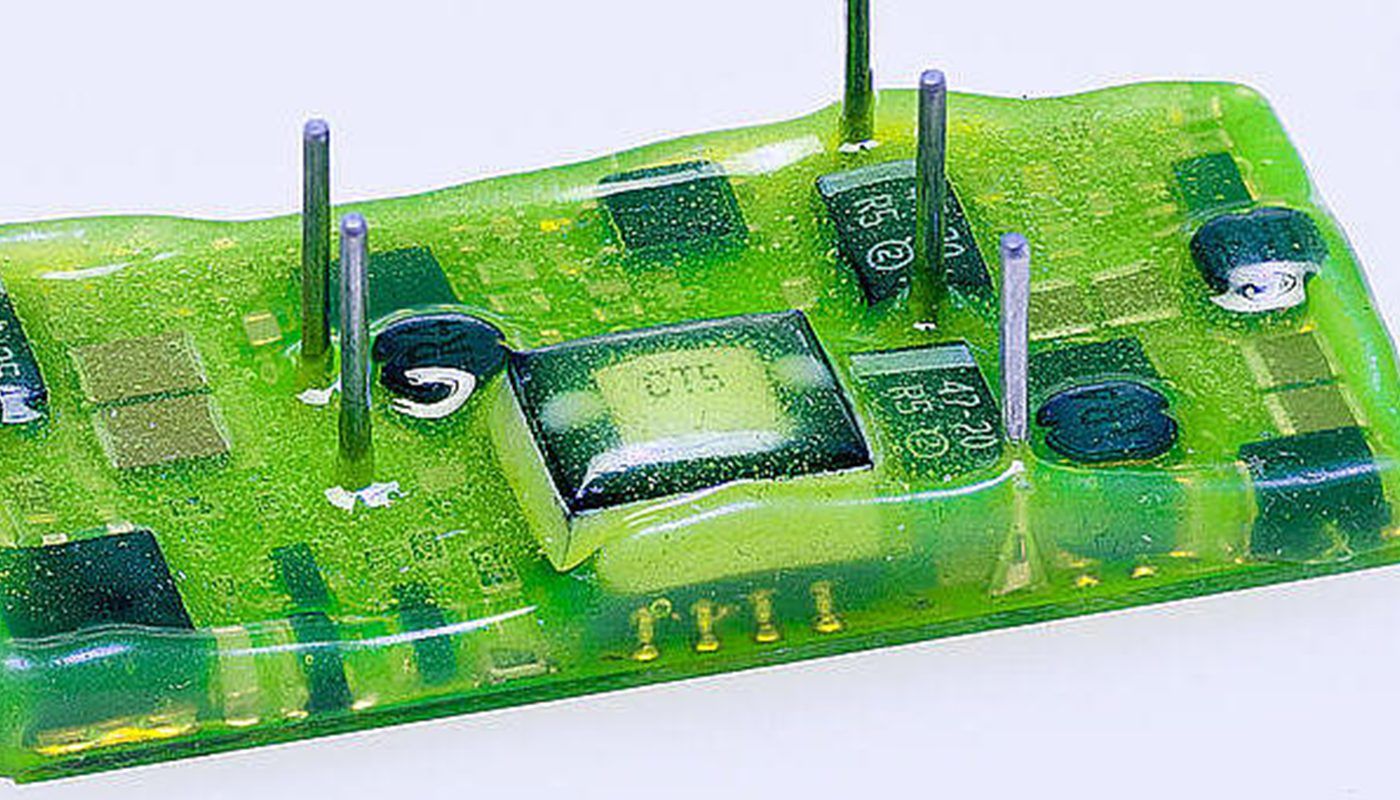
A conformal coating follows the contour of the assembled board. Thin-film coatings, usually below 100 µm according to ELANTAS, protect against humidity, condensation and dirt. Thick-film coatings, usually 100 to 500 µm, add edge coverage and vibration protection. Naltek Solutions sells the 40 Bectron® conformal coatings in Romania as a Distribution partner of ELANTAS.

Why boards are coated: condensation, corrosion and migration
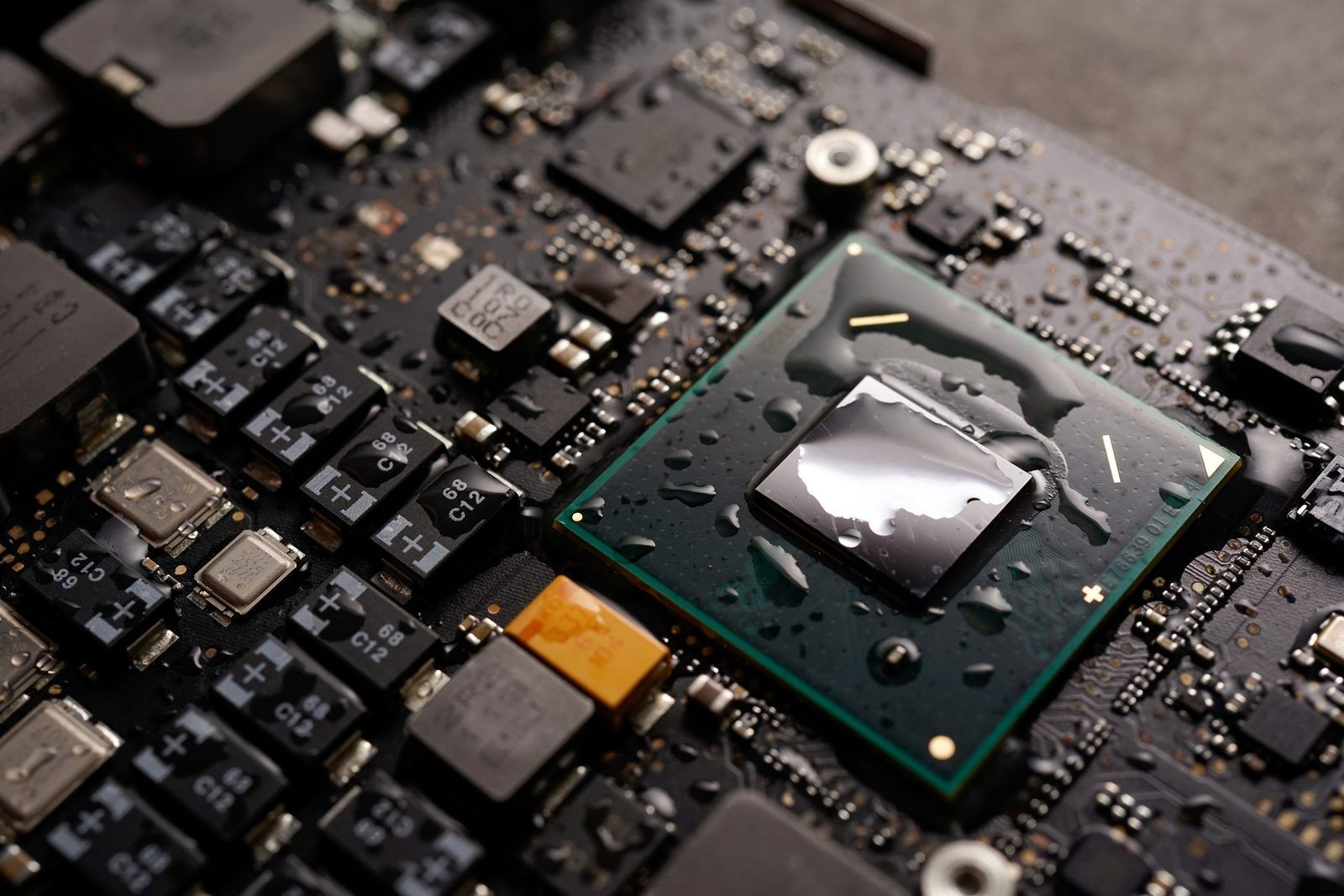
Condensed water forms a film between conductors. With residues dissolved in it and voltage applied, that film carries leakage current and drives corrosion and migration. The ELANTAS datasheets state how a coating insulates when wet. Bectron® PL 4122-40 E holds 108 kV/mm after 23 hours in water, against 112 kV/mm dry (IEC 60464-2). The same datasheet states temperature cycling from −40 to +125 °C for more than 750 cycles.
How to protect a PCB from condensation: the datasheet values compared
How it is applied: by robot, by dipping, or as dam and fill
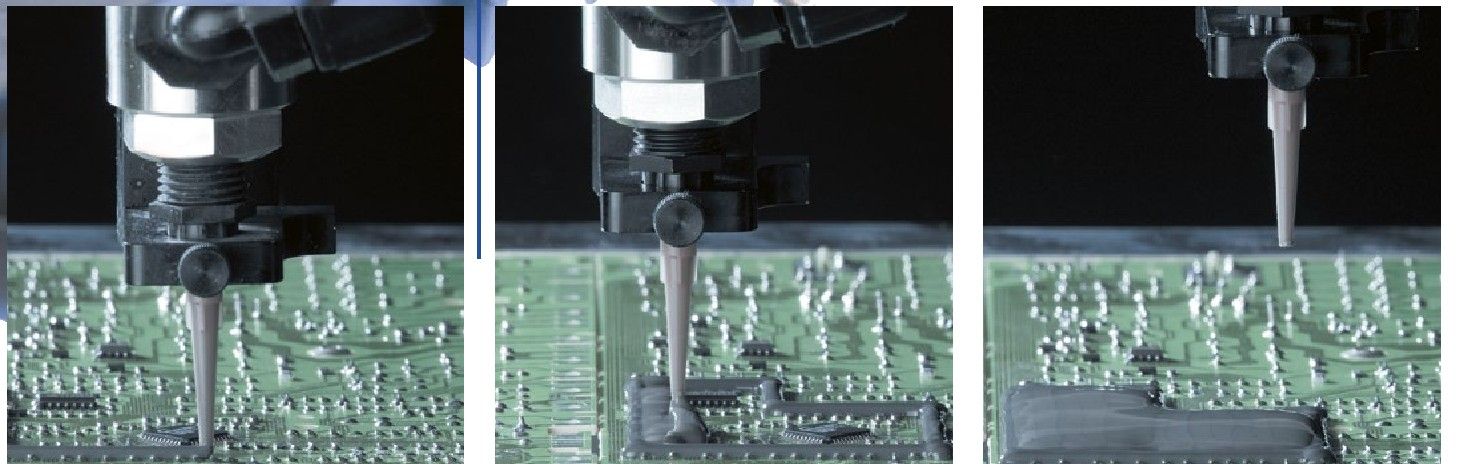
Thin film goes over the whole assembly or selected areas. On a production line a robot applies it through select-coat or select-spray nozzles, or the boards are dipped (PL 4122 E datasheet).
Thick film goes only where the board needs more build. PT 4600 is sprayed, dispensed, jetted or brushed (PT 4600 datasheet).
| Thin film, selective | PL 4122-40, PL 1102, PT 4700 N | Selective spray or film-coating valve on a coating robot |
|---|---|---|
| Thick film, selective | PT 4600, PT 4601, PK 4340 | Bead or film dispensing; PT 4600 cures under UV, shadow areas by moisture |
| Melting resins | MR 3402, MR 3405, MR 3406 | Heated hot-melt application at the temperature the TDS gives |
| Dam | PT 4606 | High-viscosity volumetric bead around the area |
| Fill | PK 4342, PT 4600 | Lower-viscosity fill inside the dam |
How it cures: at room temperature, in an oven, under UV or by air moisture
Bectron® coatings cure in one of four ways. PL 4122 E grades cure at room temperature in 16 h, or in an oven in 30 min at 80 °C. PK 4340 cures with heat in 30 min at 90 °C. PT 4600 cures under UV in 3 to 7 s, and PT 4834 with air moisture: stable after 5 to 6 h, fully cured after at least 24 h. The route decides what stands after the coating cell and how long a board waits there.
| Cure | The line needs | Example | Time |
|---|---|---|---|
| Room temperature or oven | air drying, a batch oven or an in-line oven | PL 4122 E grades, thin film | 16 h at 23 °C; 30 min at 80 °C in a batch oven; about 10 min in an in-line oven |
| Heat | an oven | PK 4340, thick film | 30 min at 90 °C (TDS range 25–35 min) |
| UV, then moisture in shadow areas | a UV lamp | PT 4600, thick film | 3 to 7 s at 2,500–3,500 mJ/cm² UVA; shadow areas in 2 to 3 days |
| Air moisture | no oven and no lamp | PT 4834, thick film | stable after 5 to 6 h at 50 % relative humidity or more; full cure after at least 24 h |
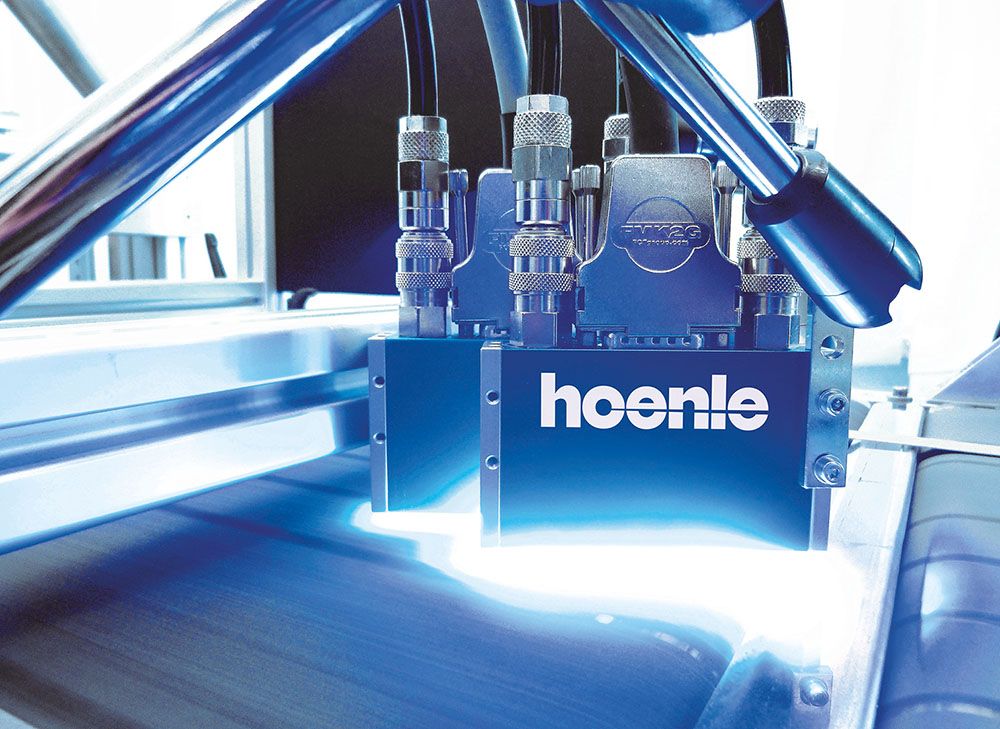
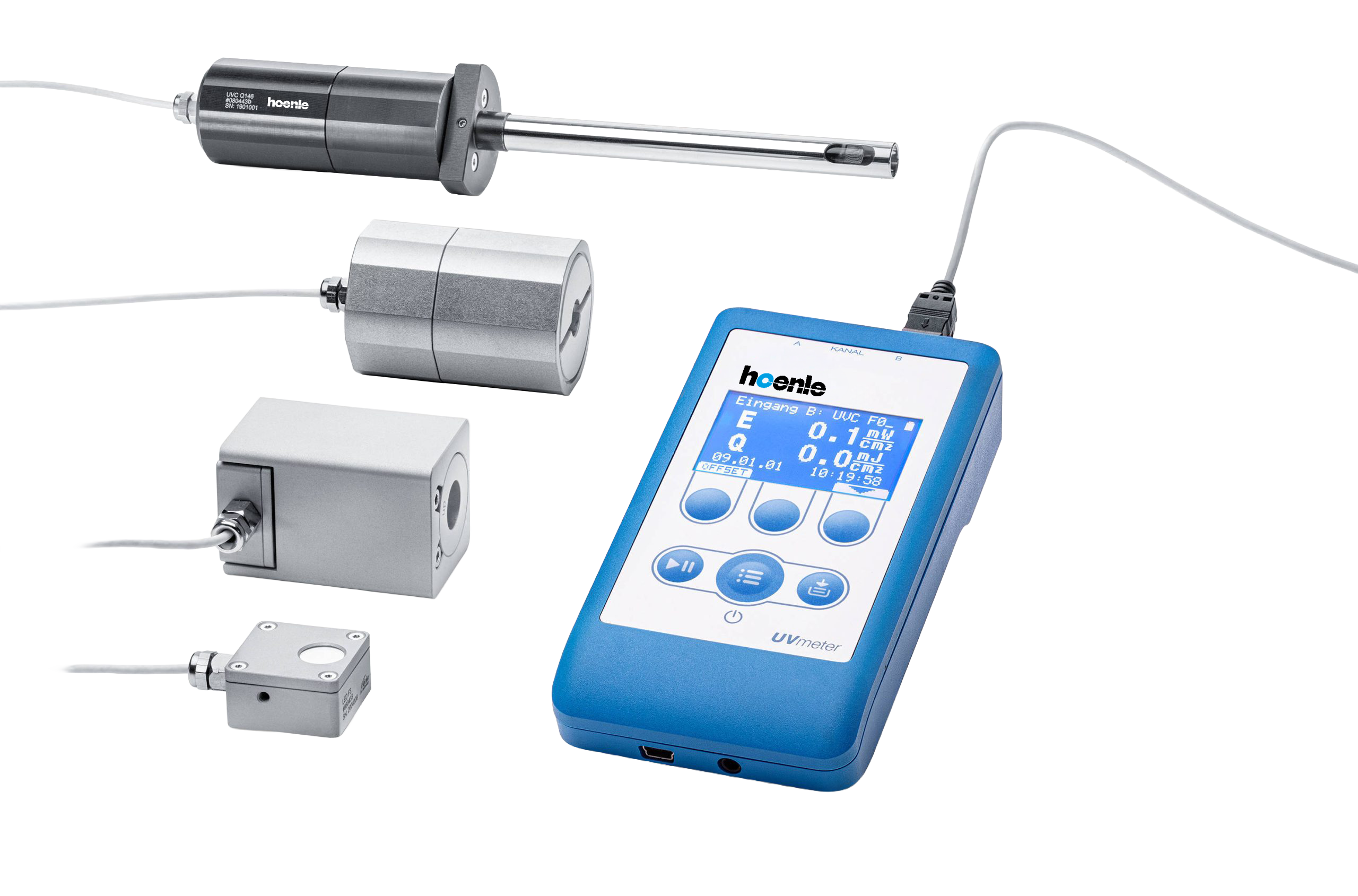
A UV coating cures when the lamp delivers the dose in its datasheet: dose = irradiance × time under the lamp. We offer Hoenle AG UV curing systems in Romania and calculate which unit reaches that dose at your belt speed.
UV curing: Hoenle AG LED systems matched to the coating’s dose · UV dose calculator · How to calculate UV dose on a conveyor
What goes wrong on the line, and what to check first
-
UV coating still tacky after the tunnel
- First cause
- The dose is too low for the belt speed.
- Check first
- The dose measured at the part, film thickness against the TDS, the age of the lamp.
-
Coating still wet beside tall components
- First cause
- UV does not reach the shaded areas beside and under tall parts.
- Check first
- Whether an oven step follows the lamp; the humidity in the hall for the moisture post-cure.
-
Bubbles in the coating after washing the boards
- First cause
- “Residual water from washing the PCB can cause bubbles.” (PT 4600 TDS)
- Check first
- Drying time and temperature after washing.
-
Poor wetting or adhesion of the coating
- First cause
- The coating is not compatible with the solder resist, paste or flux on the board.
- Check first
- Cleanliness of the board after reflow; the time between cleaning and coating.


All line problems with causes and checks · Why a UV-cured conformal coating stays tacky
Thin film or thick film: film thickness and cure
Thin film goes over the whole assembly or selected areas. Thick film is applied selectively at higher build. Most thick-film grades are solvent-free (PT 4600, PK 4340); the moisture-curing PT 48xx grades have a low solvent content. The guide to thin-film vs thick-film conformal coating compares solvent, cure and film build.
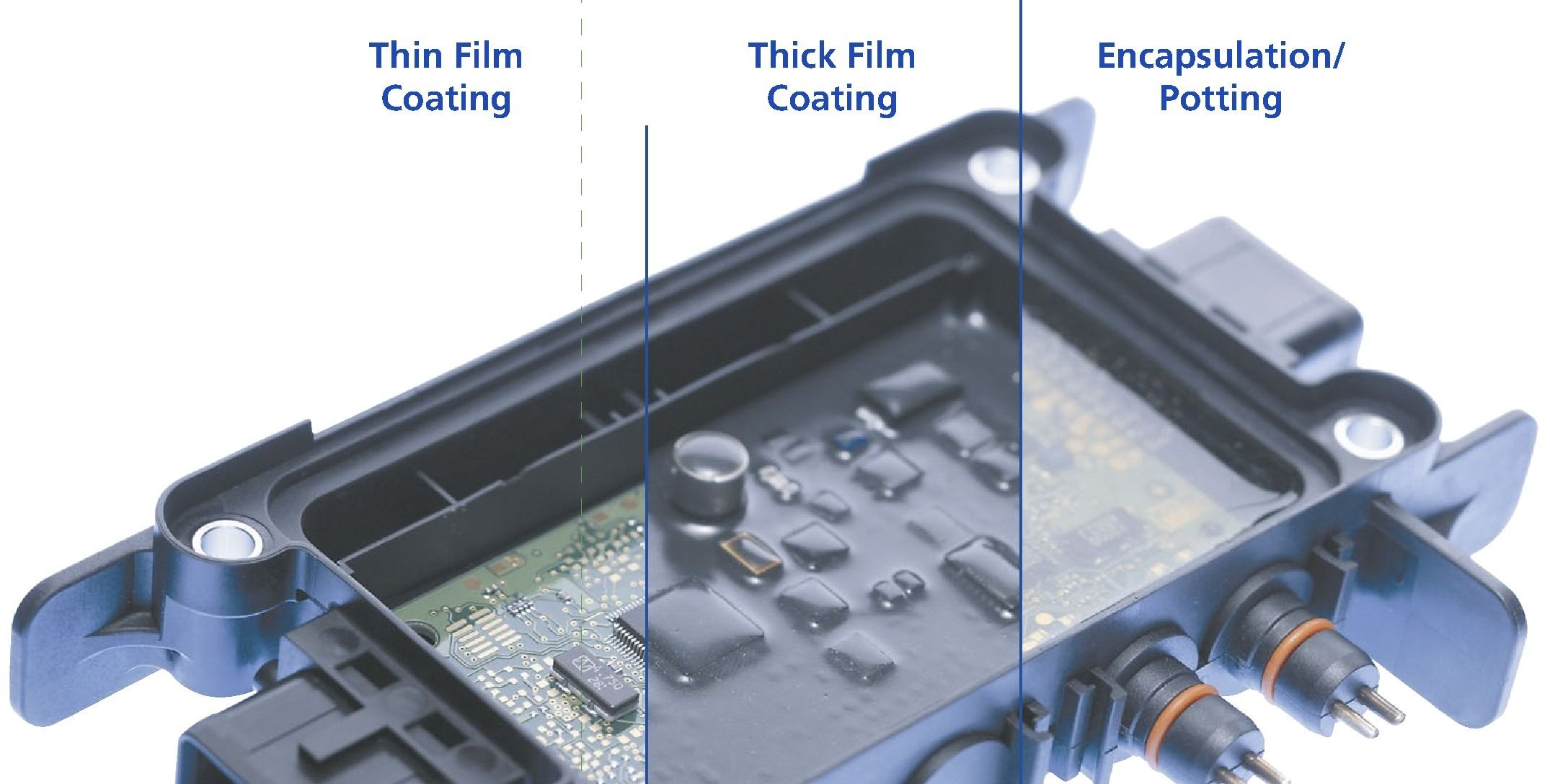

- Thickness
- usually below 100 µm (ELANTAS)
- Protects against
- humidity, condensation, dirt
- Example
- PL 4122-45E: 16 h at 23 °C or 30 min at 80 °C
- Thickness
- usually 100 to 500 µm (ELANTAS)
- Adds
- edge coverage, vibration protection
- Example
- PK 4340: 30 min at 90 °C; PT 4600: 3 to 7 s at 2,500–3,500 mJ/cm² UVA
Film thickness is drawn exaggerated.
Where to start
| If you need | Film | Start with | From the datasheet |
|---|---|---|---|
| A general thin film, robot coating or spray | Thin | PL 4122-40 E | coated areas can be inspected under UV light; a repair is soldered through the cured coating |
| Selective coating that a solvent removes for repair | Thin | PL 1104 | developed for automatic selective coating equipment; removed with Thinner 217 |
| A service temperature up to 200 °C | Thin | SC 76V1-36 | silicone, −55 to +200 °C |
| A solvent-free thin film | Thin | PL 5622-250 | epoxy; cures under UV, with heat (30 min at 90 °C) where UV cannot reach; −40 to +150 °C |
| Thick film and an oven | Thick | PK 4340 | thixotropic; also the dam in dam and fill; temperature cycling −60 to +125 °C |
| Thick film and a UV lamp | Thick | PT 4600 | solvent-free, 400–900 mPa·s; shadow areas cure by moisture |
| Thick film with no oven and no lamp | Thick | PT 4834 | applied from the cartridge; cures with air moisture; −45 to +100 °C |
Conformal coating vs potting for power electronics: what the datasheets show
Bectron® products and TDS values
The tables list the 40 Bectron® coatings with the values from the ELANTAS datasheets we have on file.
| Code | Chemical base | Viscosity | Cure | Operating temperature |
|---|---|---|---|---|
| PL 1102 | Acrylic | 40 ± 15 s, 4 mm cup, 23 °C (≈ 50 mPa·s) | – | Temperature resistance 130 °C |
| PL 1104 | Acrylic | 40 ± 15 seconds flow time (DIN/EN/ISO 2431, 4mm cup, 23 °C) ≈ 50 mPa·s | – | -40 °C to +130 °C |
| PL 4122-37 | Polyurethane varnish | 40 ± 3 seconds (DIN/EN/ISO 2431, 4mm cup, 23 °C) ≈ 50 mPa·s | – | Temperature index 134 °C (IEC 60216) |
| PL 4122-40 | Polyurethane varnish | 65 ± 5 seconds flow time (DIN/EN/ISO 2431, 4mm cup, 23 °C) ≈ 80 mPa·s | – | Temperature index 134 °C (IEC 60216) |
| PL 4122-40P | Urethane/Alkyd | – | 16h @23 °C | – |
| PL 4122-41 R | Urethane/Alkyd | 70 ± 20 mPa·s (DIN 53019, 23 °C, D=30 s-1) | – | – |
| PL 4122-45 | Polyurethane varnish | 40 ± 3 s, 6 mm cup, 23 °C (≈ 240 mPa·s) | – | Temperature index 134 °C (IEC 60216) |
| PL 4122-45T | PUR, stab. | – | 24h @25 °C, 30min @80 °C | – |
| PL 4122-47 R | Urethane/Alkyd | 600 ± 150 mPa·s (DIN 53019, 23 °C, D=30 s-1) | 16h @23 °C | Temperature index 134 °C (IEC 60216) |
| PL 5621D | Epoxy | 400 ± 250 mPa·s (DIN 53019) | – | -40 to +130 °C (short-term 160 °C) |
| PL 5622-250 | Epoxide | – | – | -40 °C to +150 °C |
| SC 75V1-16 | Silicone | – | – | -40 °C to +200 °C |
| SC 76V1-20 | Silicone | – | – | -40 °C to +200 °C |
| SC 76V1-36 | Silicone (1-part, condensation cure, Alkoxy) | 3,100 mPa·s | 24 hours (3 mm thickness) | -55 °C to +200 °C |
| SDC 76V1-18 | Silicone | – | – | – |
| Code | Chemical base | Viscosity | Cure | Operating temperature |
|---|---|---|---|---|
| PK 4332 | Polyurethane (1-component) | 5,500 ± 1,000 mPa·s (DIN 53019, D=15 s-1, 23 °C) | 70-90 min | -60 °C to +125 °C |
| PK 4340 | One-component polyurethane duroplastic (encapsulated polyisocyanate), thixotropic | 8,000–11,000 mPa·s (23 °C, DIN 53019, D = 15 s⁻¹) | 90 °C: 30 min (TDS range 25–35 min), recommended by ELANTAS; 80 °C: 60 min (60–70) | -60 to +125 °C (temperature cycling) |
| PK 4342 | Polyurethane (1-component duroplastic) | 5,000 ± 1,000 mPa·s (DIN 53019, D=15 s-1, 23 °C) | 65 ± 10 min at 80 °C or 30 ± 5 min at 90 °C | -60 °C to +125 °C |
| PK 4344 | Polyurethane (1-component, heat-curing) | 2,000 ± 500 mPa·s (DIN 53019, D=15 s-1, 23 °C) | 65 ± 10 min at 80 °C or 30 ± 5 min at 90 °C | -60 °C to +125 °C |
| PK 4351 | Polyurethane (1-component) | 6,250 ± 1,250 mPa·s (DIN 53019, D=15 s-1, 23 °C) | – | -60 °C to +125 °C |
| PK 4353 | Polyurethane (1-component, heat-curing) | 3,500 ± 500 mPa·s (DIN 53019, D=15 s-1, 23 °C) | 60-70 min | -50 °C to +125 °C |
| PK 4364B | Liquid polyol system with encapsulated isocyanate hardener | – | 60-70 min | – |
| PK 5532 | Polyurethane elastomer (1-component) | 5,500 mPa·s | 30 minutes | -50 °C to +140 °C |
| PK 5542 | Polyurethane (1-component duroplastic) | 5,000 ± 1,000 mPa·s (DIN 53019, D=15 s-1, 23 °C) | 30 min | -50 °C to +140 °C |
| PK 5553 | Polyurethane (1-component) | 3,500 mPa·s | – | -50 °C to +130 °C |
| PT 4600 | Polyurethane, one-component, solvent-free | 400–900 mPa·s (23 °C, DIN 53229) | – | -40 to +125 °C |
| PT 4601 | Polyurethane, one-component, solvent-free, thixotropic | – | – | -40 to +120 °C |
| PT 4606 | Polyurethane (1-component, solvent-free) | 38,000 ± 8,000 mPa·s (DIN 53019, D = 10 s⁻¹, 23 °C) | – | -40 to +120 °C |
| PT 4700 N | Polyurethane (UV + moisture shadow-cure) | 200 ± 100 mPa·s (DIN 53019, 23 °C) | – | – |
| PT 4810 | Polyurethane | 3,500 mPa·s | – | -50 °C to +120 °C |
| PT 4810 N | Polyurethane | – | – | -50 °C to +100 °C |
| PT 4812 | Polyurethane | 2,600 mPa·s | – | -50 °C to +100 °C |
| PT 4812 N | Polyurethane | – | – | -50 °C to +100 °C |
| PT 4814 | Polyurethane | 1,400 ± 500 mPa·s | – | -50 °C to +100 °C |
| PT 4814 N | Polyurethane | – | – | -50 °C to +100 °C |
| PT 4830 | Polyurethane | 50,000 ± 10,000 mPa·s (DIN 53019, 23 °C, D = 15 s⁻¹) | – | -45 °C to +100 °C |
| PT 4832 | Polyurethane | 50,000 mPa·s | – | -45 °C to +100 °C |
| PT 4834 | Polyurethane | 3,200 ± 800 mPa·s | – | -45 °C to +100 °C |
| PT 4840 | Polyurethane | 125,000 mPa·s | – | -40 °C to +120 °C |
| PT 4842 | Polyurethane | 3,700 mPa·s | 2 days | -40 °C to +120 °C |
Thin film · 15
- PL 1102Acrylic
- PL 1104Acrylic
- PL 4122-37Polyurethane varnish
- PL 4122-40Polyurethane varnish
- PL 4122-40PUrethane/Alkyd
- PL 4122-41 RUrethane/Alkyd
- PL 4122-45Polyurethane varnish
- PL 4122-45TPUR, stab.
- PL 4122-47 RUrethane/Alkyd
- PL 5621DEpoxy
- PL 5622-250Epoxide
- SC 75V1-16Silicone
- SC 76V1-20Silicone
- SC 76V1-36Silicone (1-part, condensation cure, Alkoxy)
- SDC 76V1-18Silicone
Thick film · 25
- PK 4332Polyurethane (1-component)
- PK 4340One-component polyurethane duroplastic (encapsulated polyisocyanate), thixotropic
- PK 4342Polyurethane (1-component duroplastic)
- PK 4344Polyurethane (1-component, heat-curing)
- PK 4351Polyurethane (1-component)
- PK 4353Polyurethane (1-component, heat-curing)
- PK 4364BLiquid polyol system with encapsulated isocyanate hardener
- PK 5532Polyurethane elastomer (1-component)
- PK 5542Polyurethane (1-component duroplastic)
- PK 5553Polyurethane (1-component)
- PT 4600Polyurethane, one-component, solvent-free
- PT 4601Polyurethane, one-component, solvent-free, thixotropic
- PT 4606Polyurethane (1-component, solvent-free)
- PT 4700 NPolyurethane (UV + moisture shadow-cure)
- PT 4810Polyurethane
- PT 4810 NPolyurethane
- PT 4812Polyurethane
- PT 4812 NPolyurethane
- PT 4814Polyurethane
- PT 4814 NPolyurethane
- PT 4830Polyurethane
- PT 4832Polyurethane
- PT 4834Polyurethane
- PT 4840Polyurethane
- PT 4842Polyurethane
Manufactured by ELANTAS Europe; ELANTAS Europe’s plants are certified to IATF 16949:2016 (ELANTAS presentation, 07/2024).
What we do on a coating project
We help you choose the coating that fits your board’s requirements and the cure your line can run. We help with samples and trial quantities for your line, and send the current TDS and SDS from ELANTAS. For a UV coating we calculate the dose for your lamp and belt speed, and measure it on site on request. Lead time for Bectron®: 8 weeks from order. Bectron® deliveries come with a certificate of analysis from ELANTAS.
Next to this: UV curing · Potting and encapsulation
Ask for a sample, a TDS, a quote or a dose calculation
Tell us what you need. We reply within 24 hours, in Romanian or English.
Contact directly
Alexandru Nichifor
Sales & technical support
nichiforlx@
Naltek Solutions S.R.L.
Sat Comori, Com. Gurghiu, nr. 81, jud. Mureș 547298